

KEY POINTS
- Mobility for Africa introduced its solar-powered Hamba tricycles in Zimbabwe in 2019.
- The vehicles support farming, produce delivery and passenger transport.
- Rural health workers and residents also use the vehicles to reach healthcare services.
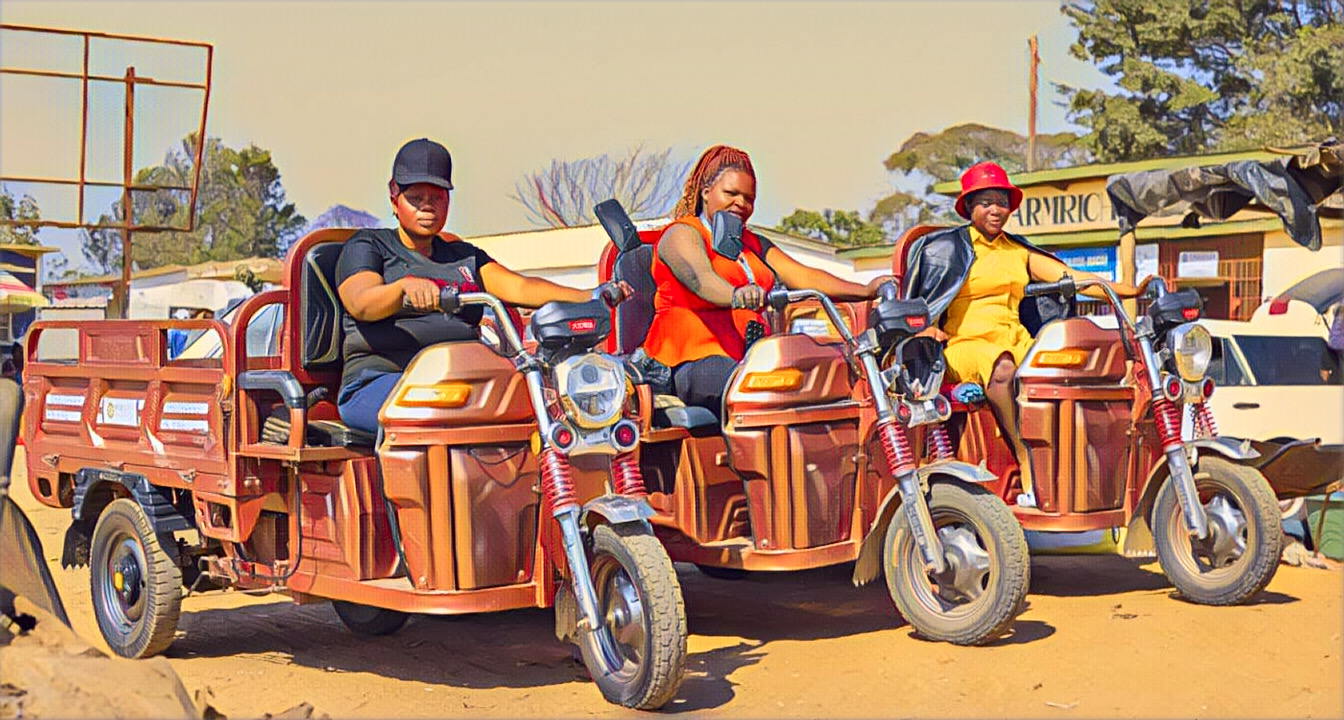
Electric tricycles are changing how some rural communities in Zimbabwe transport goods and access essential services, offering women farmers and healthcare workers an alternative to long journeys on foot. The vehicles, known as Hambas, are part of an initiative by social enterprise Mobility for Africa, which introduced solar-powered, battery-swappable three-wheelers in the country in 2019.
Through a lease-to-own arrangement, the programme has provided transport options for people in areas where conventional services are limited. The Associated Press reported on the experience of farmer Agefi Mutambo, whose electric tricycle has helped her increase the volume of produce she can transport to market. The vehicles also support passenger transport and healthcare access, showing how improved mobility can boost household income and strengthen community wellbeing.
Electric transport expands rural businesses
Before acquiring her electric tricycle, Mutambo walked between seven and 10 kilometres carrying a 20-kilogram bucket of tomatoes to sell. The journey limited how much produce she could transport and made it difficult to increase her deliveries. According to the Associated Press, she now makes two to three deliveries each week, transporting approximately 300 kilograms of produce per trip and earning about $80 per delivery. The vehicle has enabled her to supply schools and clinics while increasing the volume of goods she can move. Her experience illustrates the effect that improved transport can have on small-scale agricultural businesses, particularly for women who face additional barriers to reaching markets.
The Hamba tricycles are designed to carry substantial loads and operate in areas where conventional transport can be difficult to access. The vehicles can carry more than 400 kilograms and travel approximately 100 kilometres on a charge, according to the Associated Press. Their battery-swapping system allows users to exchange depleted batteries rather than depend entirely on waiting for a full recharge. Solar-powered charging infrastructure also supports the initiative in communities where access to electricity may be limited. This combination of vehicle design and charging arrangements is intended to make electric transport practical for rural users.
Mobility for Africa uses a lease-to-own arrangement to make the vehicles more accessible to people who may not be able to purchase them outright. The approach allows users to spread the cost over time while using the tricycles to support income-generating activities. Farmers can transport larger quantities of produce, while other users can offer passenger services and deliveries. However, the long-term affordability of the arrangement will depend on users’ ability to make payments and maintain the vehicles. Access to spare parts, batteries and repair services will also be important as the programme expands.
Healthcare access benefits from better mobility
The impact of the tricycles extends beyond farming and market deliveries. In communities where residents may have to travel long distances to reach clinics, the vehicles provide an alternative for patients, health workers and families. The Associated Press reported that users have employed them to help neighbours reach medical care. This is particularly relevant in rural areas where limited transport can delay clinic visits or make it difficult for health personnel to reach households. Better mobility does not replace the need for properly equipped healthcare facilities and trained medical staff, but it can help reduce one of the practical barriers between communities and available services.
The vehicles can also support community health workers who need to travel between households and healthcare facilities. Limited transport options can make reaching patients time-consuming and difficult, particularly during emergencies or when poor road conditions disrupt access. A vehicle capable of carrying passengers and goods can help health workers move more efficiently and provide assistance to residents who might otherwise struggle to reach medical services. The programme therefore demonstrates how transport solutions designed for rural commerce can also contribute to wider community needs.
Mobility for Africa’s initiative forms part of a broader shift towards smaller electric vehicles as alternatives to conventional cars in parts of the continent. However, the long-term reach of such programmes will depend on sustainable financing, battery availability, maintenance networks and the expansion of charging infrastructure. The vehicles must also remain affordable for their intended users. Zimbabwe’s experience demonstrates that electric mobility can extend beyond urban passenger transport. By connecting farms to markets and communities to essential services, the tricycles demonstrate how relatively small transport solutions can support economic activity and improve access to healthcare.