

KEY POINTS
-
Zimbabwe is projected to rank 14th in Africa, with GDP reaching $65.92 billion in 2026.
-
Its economy is forecast to grow by 5%, below Tanzania’s projected 5.9%.
-
Dollar dependence, inflation and debt arrears remain challenges for Zimbabwe despite its recovery.
Zimbabwe is projected to become Africa’s 14th-largest economy in 2026, with gross domestic product (GDP) expected to reach $65.92 billion. The recovery is being supported by stronger mining activity, improved agricultural production and higher gold earnings.
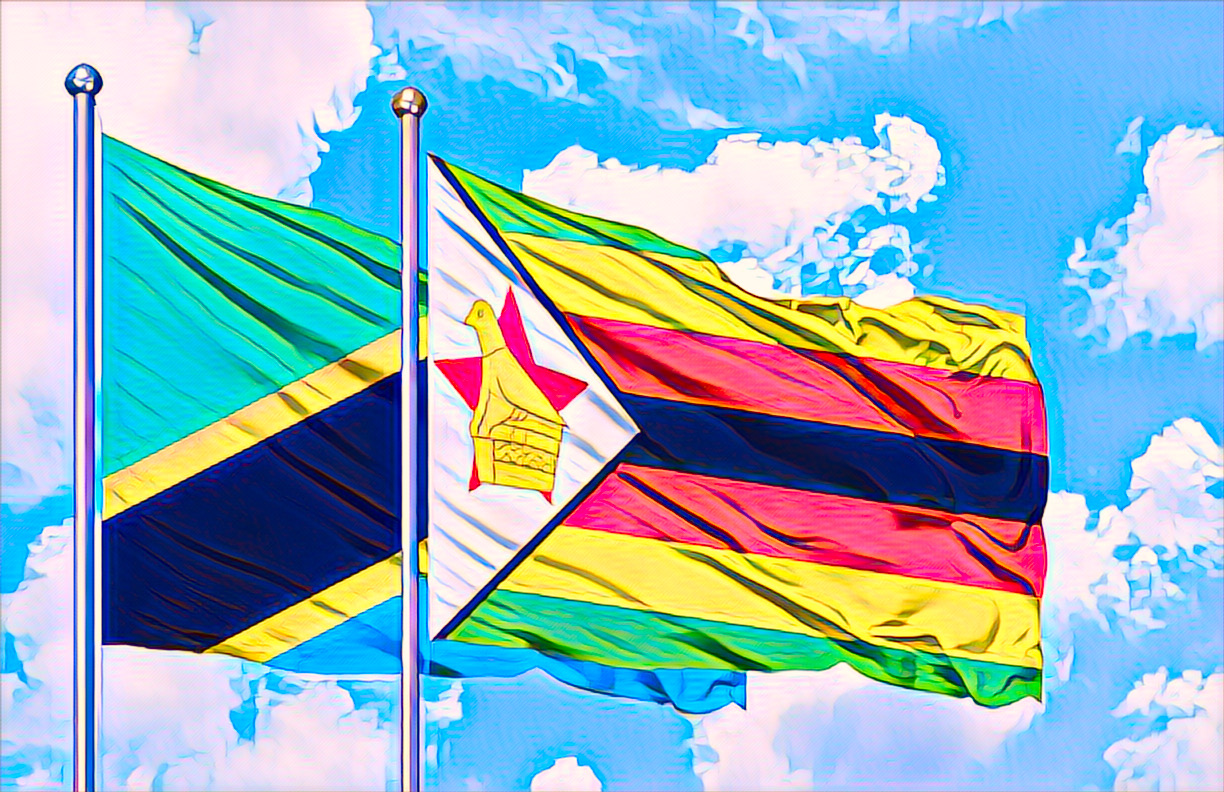
However, despite its growing economic size and widespread use of the US dollar, Zimbabwe is expected to record slower growth than Tanzania, which has continued to expand through infrastructure investment and activity across several sectors.
Zimbabwe climbs in Africa’s economic rankings
According to the International Monetary Fund’s (IMF) October 2026 World Economic Outlook, Zimbabwe is projected to record a GDP of $65.92 billion, placing it 14th among Africa’s largest economies.
The latest estimate represents an improvement from earlier projections. The IMF ranked Zimbabwe 17th in 2025, when its GDP was estimated at $51.22 billion. In April 2026, the country was projected to rank 16th with an economy valued at $56.71 billion.
Zimbabwe’s latest position puts it ahead of Cameroon, with a projected GDP of $64.81 billion, and Tunisia, at $62.74 billion.
The improvement comes as the country benefits from stronger gold export earnings, recovering agricultural output and remittances from citizens living abroad.
Growth slows despite a stronger economic outlook
Zimbabwe’s economy is forecast to grow by 5% in 2026, following estimated growth of 8.3% in 2025.
Although the projected expansion remains significant, it is below Tanzania’s expected growth rate of 5.9% this year.
Tanzania’s economy is projected to reach $96.18 billion, making it approximately $30.26 billion larger than Zimbabwe’s.
The difference illustrates that an improvement in a country’s position in Africa’s GDP rankings does not necessarily mean it is growing faster than its regional counterparts.
Zimbabwe’s economic performance also remains affected by persistent inflation concerns, currency instability and substantial debt arrears, which have restricted its access to international financing.
Heavy reliance on the US dollar remains a challenge
Zimbabwe’s currency difficulties have been shaped by years of high inflation, currency depreciation and repeated attempts to reform its monetary system. These problems have weakened public confidence in the local currency and encouraged households and businesses to rely on the US dollar.
In April 2024, the government introduced the Zimbabwe Gold currency, known as ZiG, in an effort to restore monetary stability.
However, the US dollar remains widely used in the economy. According to the IMF’s May 2026 assessment, it accounted for about two-thirds of payments by value within Zimbabwe’s national payment system.
Dollarisation has helped many businesses and households protect their savings and transactions from the depreciation of the local currency. However, it also limits the central bank’s ability to influence domestic monetary conditions.
The authorities have introduced tighter monetary measures to support price and exchange-rate stability. Nevertheless, annual ZiG inflation rose to 3.7% in September 2026, up from 2.9% in August, according to the Zimbabwe National Statistics Agency.
The IMF has acknowledged improvements in economic stability but continues to emphasise fiscal discipline and reforms to strengthen confidence in the financial system.
GDP rankings do not tell the whole story
Zimbabwe’s projected GDP increase must also be considered alongside the country’s currency challenges.
GDP figures expressed in US dollars can change because of exchange-rate movements and adjustments to national accounting methods, even when the underlying level of economic production does not change by the same proportion.
This is particularly relevant to Zimbabwe because its national accounts were redenominated following the introduction of ZiG in 2024, according to the IMF’s October 2026 database.
As a result, the projected $65.92 billion figure provides an estimate of Zimbabwe’s economic output in dollar terms. It does not, on its own, establish that the country has achieved monetary stability or that living standards have improved by a corresponding amount.
The sustainability of the recovery will depend partly on the country’s ability to maintain price stability, rebuild confidence in its currency and address its financing challenges.
Tanzania follows a different currency and growth strategy
Tanzania has pursued a different approach to currency management, introducing measures to strengthen the use of its national currency, the Tanzanian shilling, in domestic transactions.
In March 2025, the government introduced regulations requiring businesses to price goods and services in shillings and accept payments in the currency, subject to specified exceptions.
Beyond currency policy, Tanzania’s growth has been supported by agriculture, construction, mining, tourism and infrastructure investment.
The country is also pursuing a proposed $42 billion liquefied natural gas project involving international energy companies. However, the project is still awaiting a final investment decision.
Tanzania’s projected 5.9% growth in 2026 therefore reflects a combination of economic activities and investment prospects rather than currency policy alone.
Both countries remain exposed to exchange-rate pressures and external economic risks, but their differing approaches to currency management and investment continue to shape their economic outlooks.